
Discover the SSE in French Polynesia
The Social and Solidarity Economy (SSE) embodies an economic model for the future that complements the so-called “traditional” economy. This innovative approach to entrepreneurship is based on the values of solidarity, inclusion, and cooperation, reflecting our Polynesian society. The democratic governance model places people at the heart of projects, with a focus on socio-environmental impact, while limited profitability promotes the resilience and sustainability of the structures involved.
Discover a new way of doing business where economic development goes hand in hand with social and environmental impact, where people and solidarity are at the heart of priorities, so that together we can find new solutions to the societal challenges of today and tomorrow.
The SSE represents a powerful lever in terms of opportunities for many local actors (commercial enterprises, associations, cooperatives, foundations, mutual societies), who work in the public interest through local actions close to the community, with the support of institutions and local authorities.
Indeed, the Social and Solidarity Economy (SSE) forges a tenuous link between public and private actors, offering alternative ways of doing business and shaping our society, while stimulating alternative economic levers.
Issues that benefit the population and the environment
This dynamic is fully integrated into the Economic Development Strategy – Cap 2033 – ‘A Fano Rā promoted by the Ministry of Economy, Budget, and Finance, responsible for Energy, Post, and Telecommunications, and contributes to meeting the challenges aimed at achieving the objectives set by the Government within the next ten years.
By working across all sectors of activity and, in doing so, with a multitude of socio-economic actors, ranging from agriculture to traditional crafts, sustainable tourism, and even the medical-social, education, culture, and energy sectors, among others.

This new way of doing business supports overall economic activity and promotes a fairer and more responsible economic model that serves the public. The Social and Solidarity Economy (SSE) works to build a more inclusive and equitable model of society.
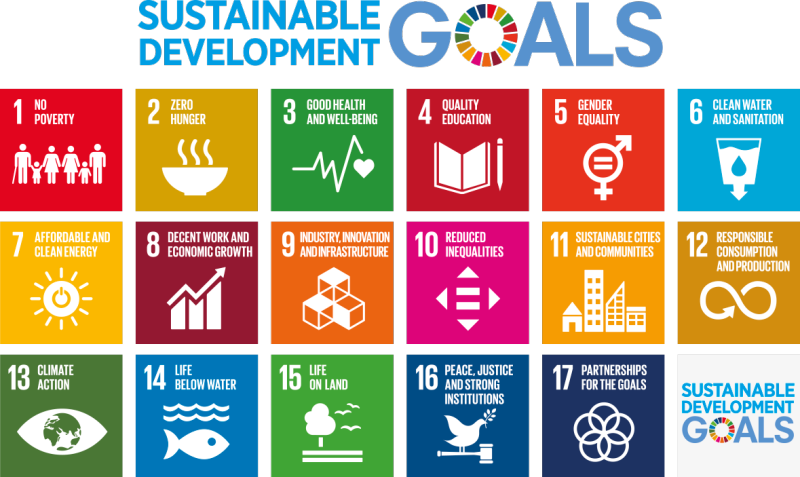
Doing business differently: a lever for achieving the Sustainable Development Goals (SDGs)
Defined by the United Nations, the seventeen Sustainable Development Goals (SDGs) “cover all development issues in all countries, such as climate, biodiversity, energy, water, poverty, gender equality, economic prosperity, peace, agriculture, education, etc. They are all part of a dynamic that falls within the scope of the Social and Solidarity Economy (SSE).
A major challenge to be faced across the entire country
The definition of the Social and Solidarity Economy (SSE) in French Polynesia is the result of extensive consultation carried out in the field, working closely with stakeholders who are involved in and committed to an entrepreneurial approach that serves the public interest, promotes human well-being, and strives to preserve the environment.
Currently being drafted, the future country bill (expected to be implemented by early 2026) will include an objective definition resulting from the consultation carried out with socio-economic and institutional actors (diagnosis carried out from November 2024 to April 2025 by ESS France Outre-mer).
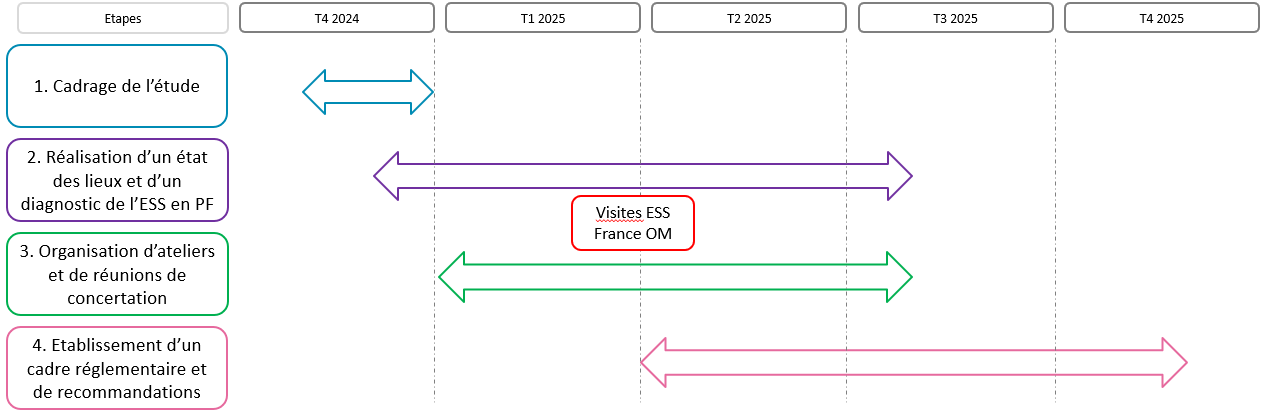
Ultimately, the goal is for the Polynesian social and solidarity economy to be able to operate flexibly across the entire territory, in all five archipelagos. A stronger territorial network has been made possible thanks to the commitment of numerous public and private partners, which can only serve to strengthen the social and solidarity economy’s roots among the population in a sustainable manner.
This definition, obtained at the end of this collective process, could be included in the body of the proposed law and guide certain enforcement procedures.